
About Rustic Roots Warehouse
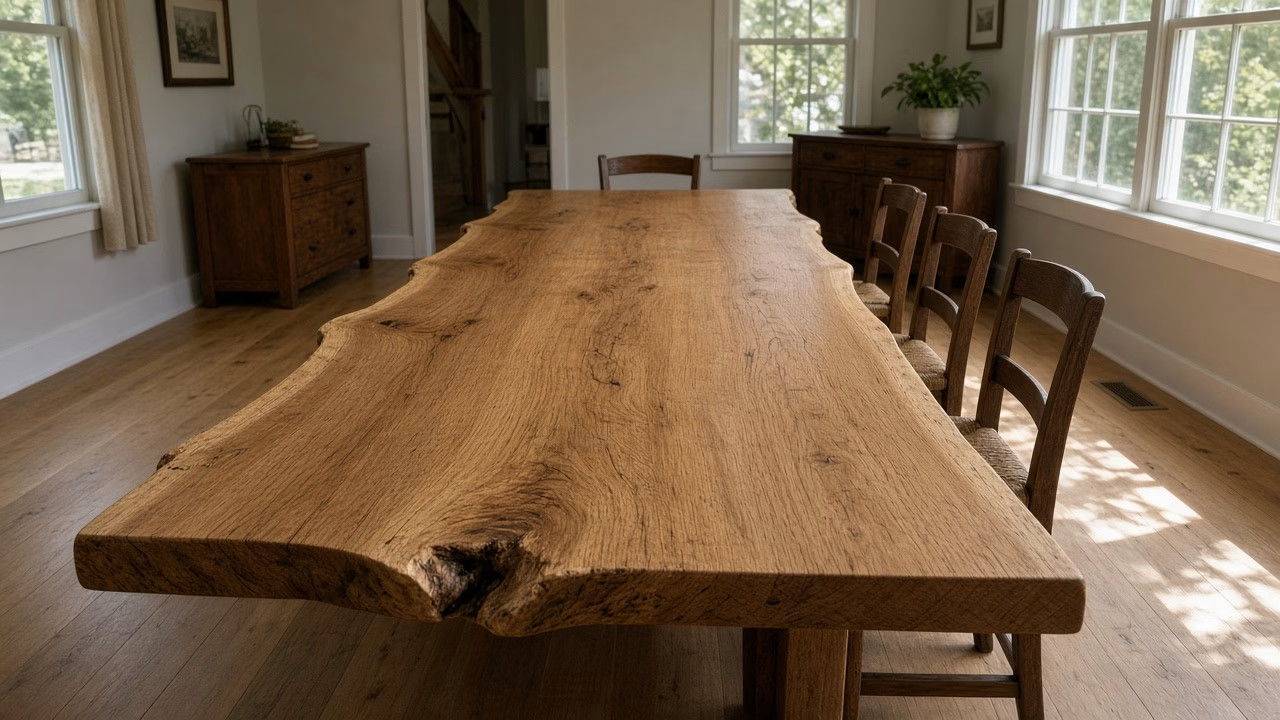
You are deciding if a wide live-edge top can stay flat in your house. Live Edge Slabs in Belmont hold up indoors when we seal every face and the room stays fairly steady. Because a bare slab takes on moisture and can cup or check.
So we check moisture before the top goes in. We write the home steps beside the shop work.
Always Growing. Always Creating.
What Damp Air Does to Live Edge Slabs in Belmont
Wood takes on moisture across the grain. When humid air stays on it, a wide top grows in width. In Belmont, hot damp summers and mild wet winters keep outdoor air moist. So a slab that left the shop dry can gain moisture indoors.
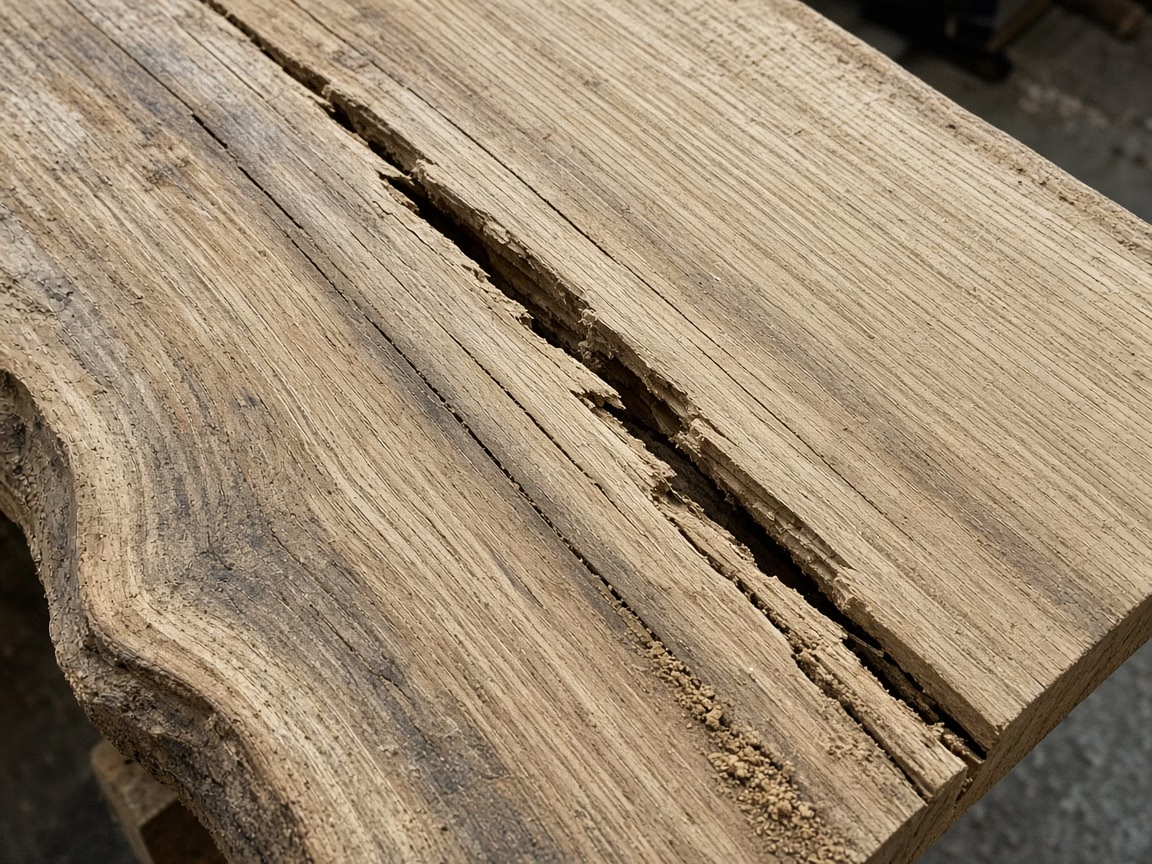
A cup shows as a curve across the width. We’ve brought back slabs that went in with a bare underside. After that face swelled, the slab moved. Checks often open near the pith or a bark pocket.
Where the Work Begins
When a top starts to move, find the spot that changed. A scrape at the chair line means the top grew. Then wipe standing water the same day. Don’t leave a wet cloth on the wood.
Look under the top if you can. A bare bottom in a damp room often lets a top cup. We sand a light cup and reseal if the wood can still move.
Shaped by Nature. Finished by Hand.
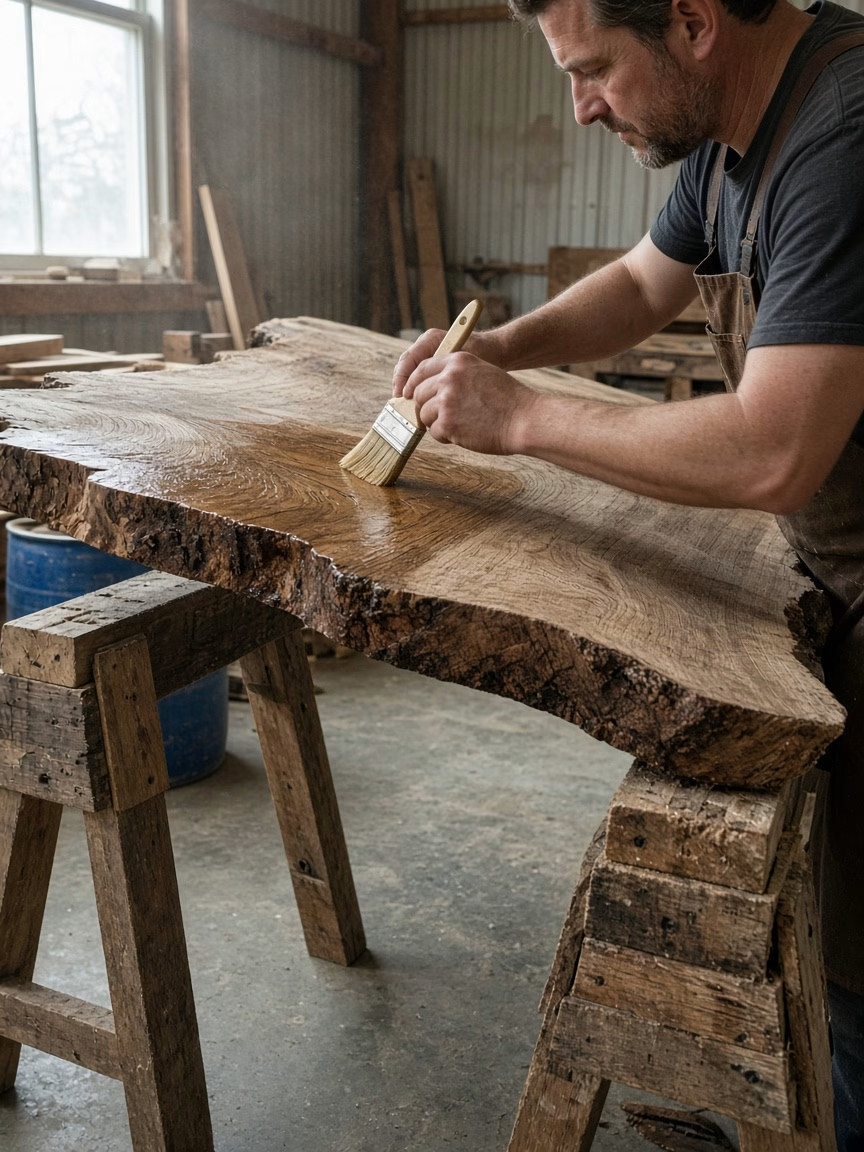
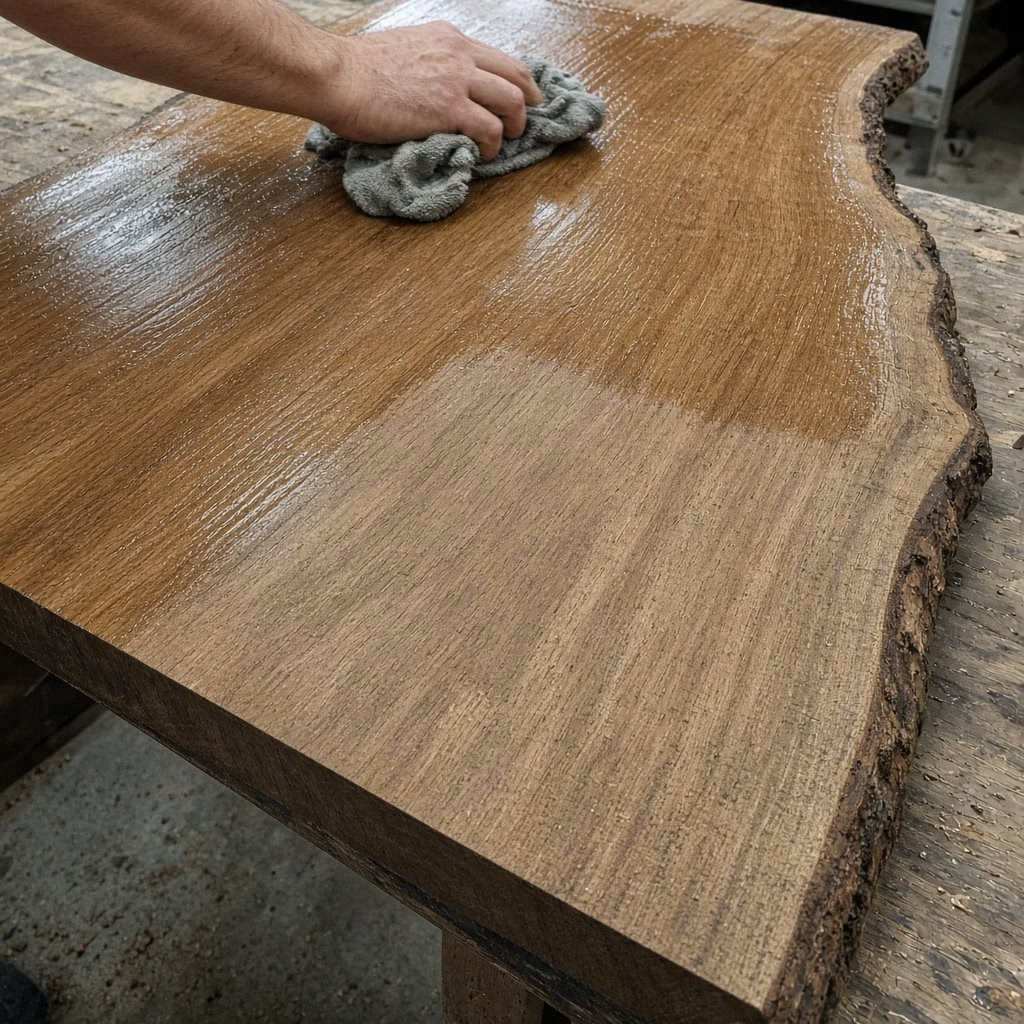
A film finish, such as varnish, sheds a short spill. An oil looks dull when it needs another wipe. Then you wipe a thin coat on and take the extra off.
We seal the underside and the live edge. End grain gets finish too. For example, we fill counter voids first, because a check near a sink traps water. We write each quote line by line.
A Resource for Ideas of Every Size
Shop Time for Live Edge Slabs in Belmont
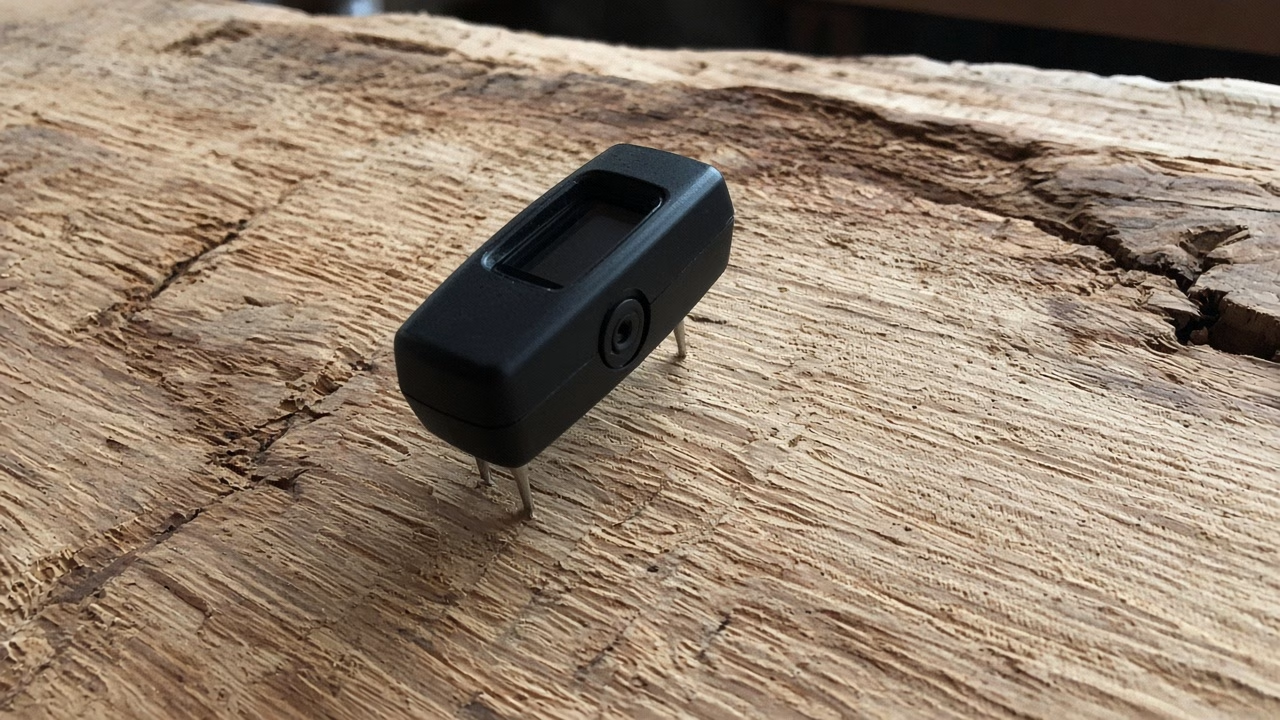
A cupped top can mean a shop visit. In Belmont, people have brought tops in after a humid stretch. We read moisture before we sand.
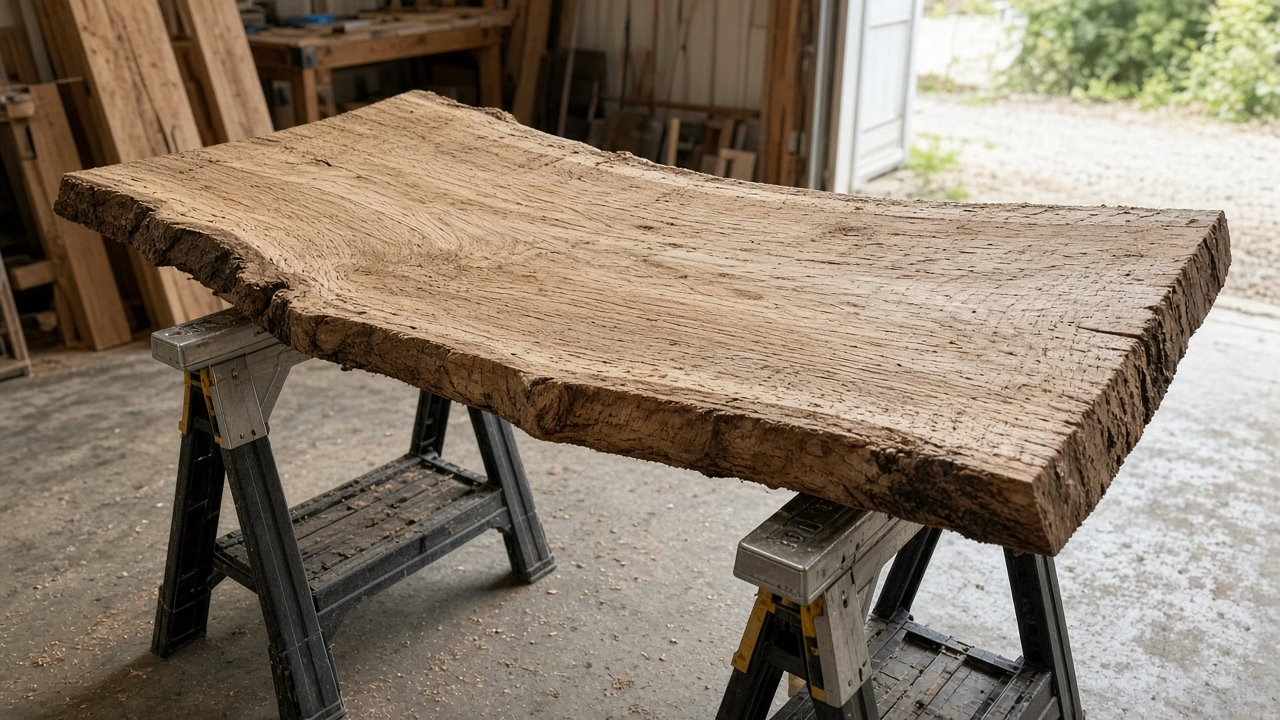
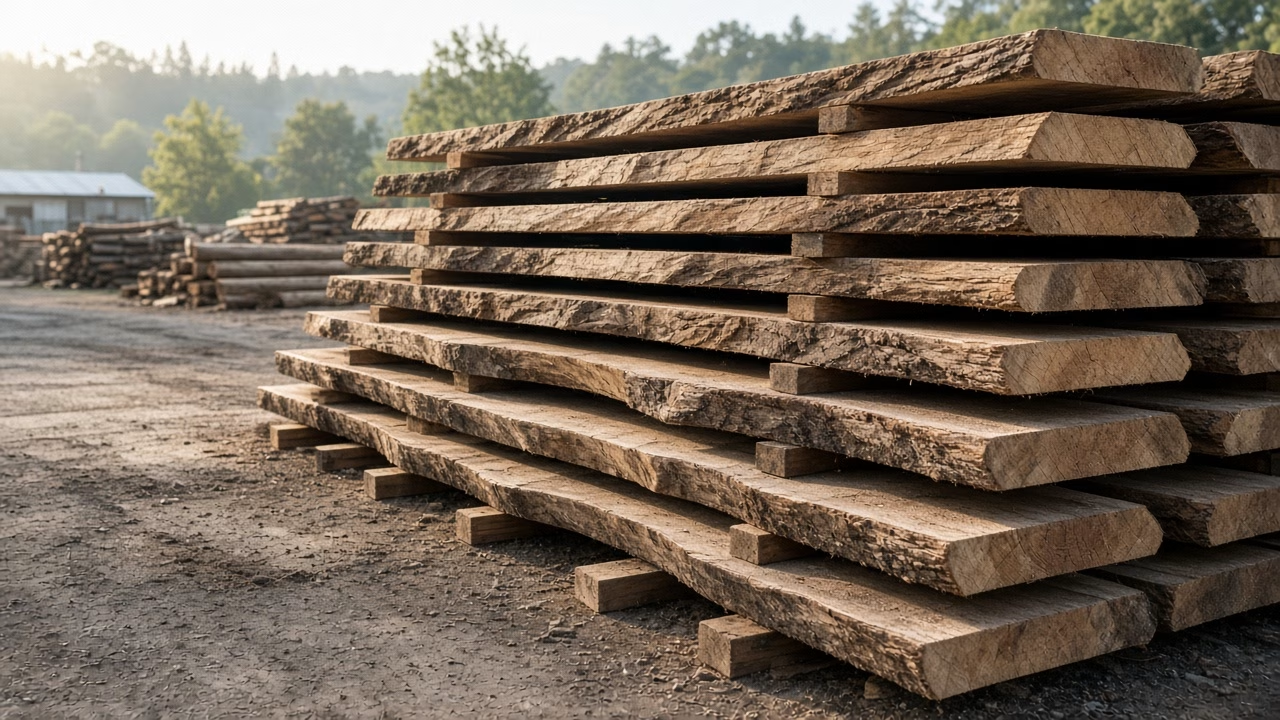
We mill our own logs and dry them in the air or the kiln. Because the face can look dry while the core is wet, that slab stays out of a closed house. The Lucas mill cuts slabs up to six feet wide. So kiln runs start at 500 board feet, and one table usually comes from stock we already dried.
More to Discover Around Every Corner
When humid weeks stack up, check Live Edge Slabs in Belmont for rub marks at the chair line. Look where the top meets a wall.
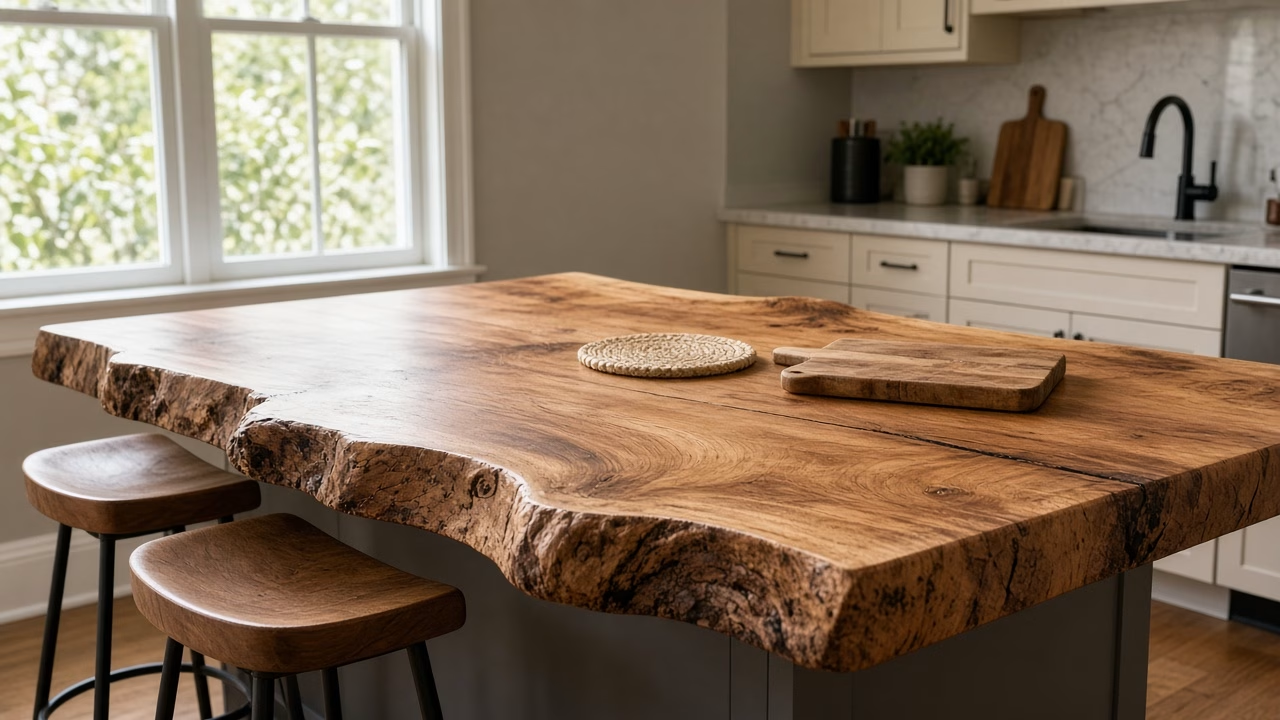
So use a board under drinks. If you want to see how we build and finish these tops, look at our live edge slabs work. Wipe a spill before liquid sits in a check.
See What We’ve Been Creating
People have told us an upstairs room in an older house stays closer to outdoor air. But cooling can pull a tighter house drier while it runs.
For example, ask whether the room sits over a crawl space. When we look, we ask if a vent blows on the top. Winter heat dries indoor air, and a top can shrink enough to open a check.
Planning an Outdoor Project?
House Placement for Live Edge Slabs in Belmont
In Belmont, a porch piece sits in damp air all year. A screened porch does that. We’ve built pieces for covered spots, with a heavier finish schedule for that air.
Indoors, keep the slab out of a hard sun patch. Then the slab can twist if one half dries faster. So lift a center runner now and then.
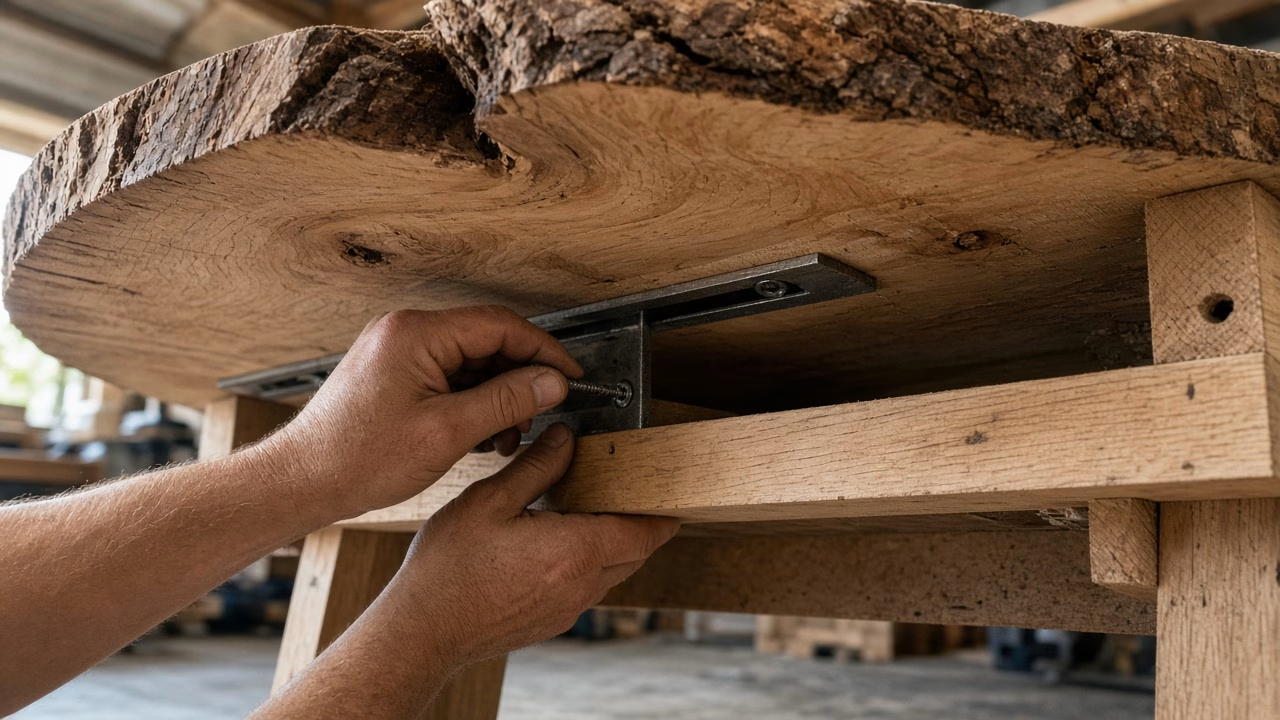
People have called about a bench that rubbed in a hot spell and eased when the air dried. We sanded and resealed the bare face. Then we set it on fasteners that let the wood move.
Live Edge Slabs in Belmont also show trouble when a planter sits there all summer. After a refinish, use a tray. A check that came in the log gets its own fill plan.


Come See What’s Taking Root
If you are choosing a new piece, ask how that species moves in damp air. Then look at dried slabs and finishes we have on hand.
What to Ask Before You Hire for Live Edge Slabs in Belmont
- What moisture reading is in the slab now?
- Did you kiln-dry it, or is the core still settling?
- Does the quote cover underside and edge finish?
- What do I wipe on when the surface looks dry?
Bring a photo of the room and the length you need. We can mill a qualifying log you own. So dried stock is the usual path when one slab misses the 500-board-foot kiln minimum.