
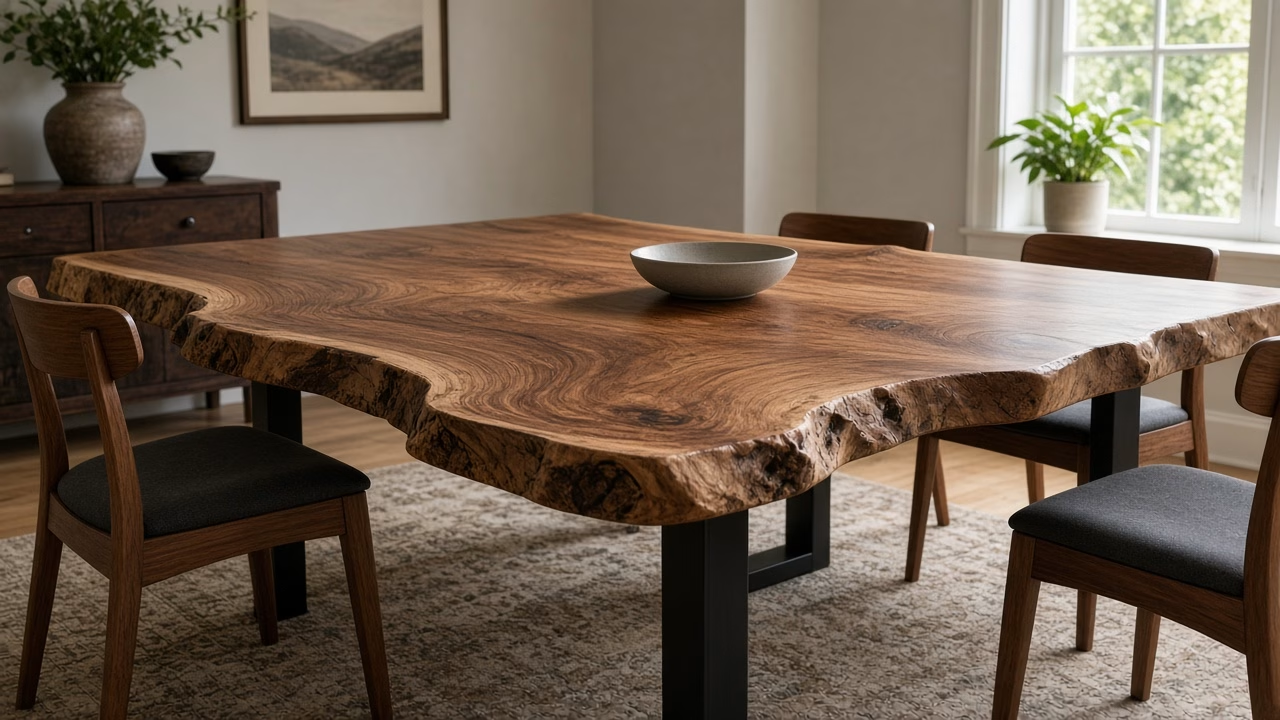
About Rustic Roots Warehouse
We look after Live Edge Slabs in Pineville by wiping spills the same day and keeping room moisture steady. We put on a finish meant for humid summers and heated rooms, and that finish handles the daily spills.
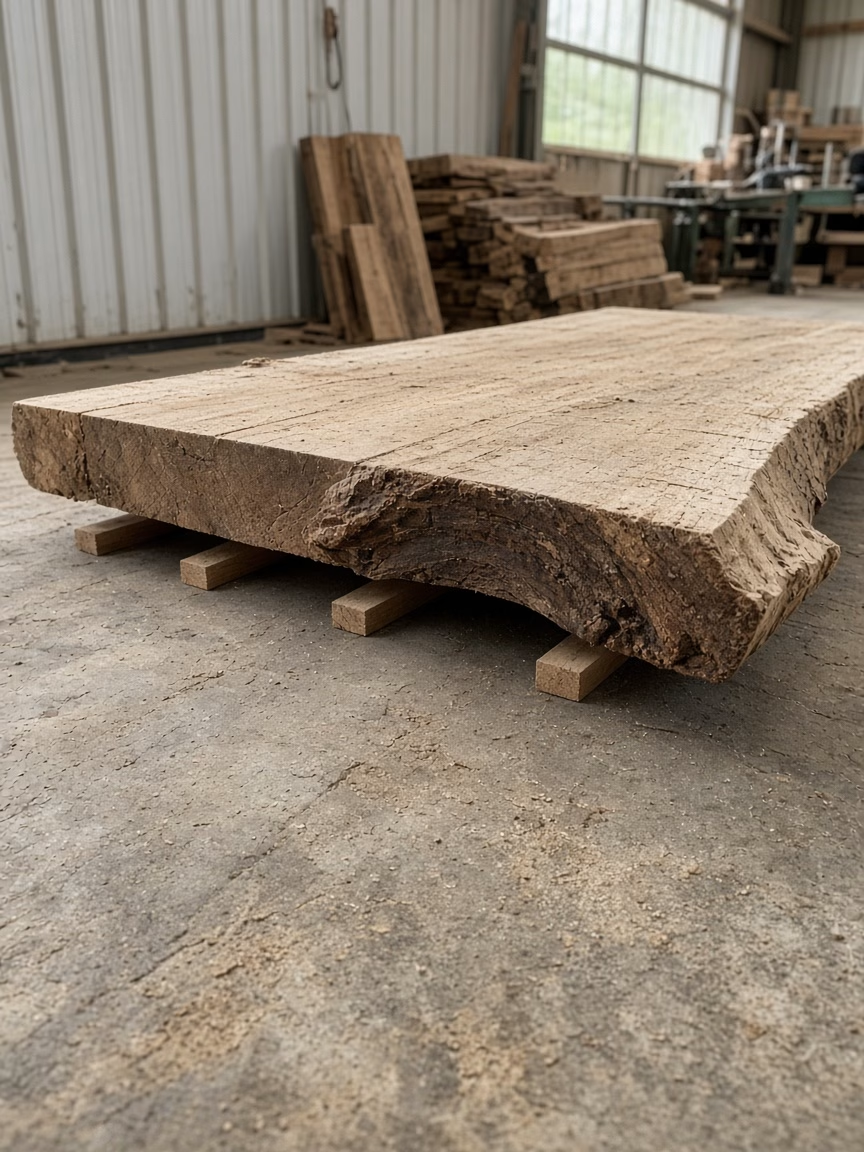
Hot, humid summers and air-conditioned winters swing indoor moisture in Pineville. Because of that swing, a slab cups or cracks without a full dry and acclimation. So we start the work while it’s still on sticks in the shop.
Always Growing. Always Creating.
Humidity and Live Edge Slabs in Pineville
Wood takes on water across the grain. When the air stays humid, a wide top grows in width. The added width is where a check usually starts, near the live edge. In Pineville, North Carolina, summer air stays heavy, and a cooled room stays drier.
We have pulled slabs that cupped after one face sat on a damp wall. Because one face stayed wetter, a corner lifted and a check opened near the bark.
Where the Work Begins
When a slab missed that dry-down, wiping at home won’t pull it flat. Here is the order our shop work goes through.
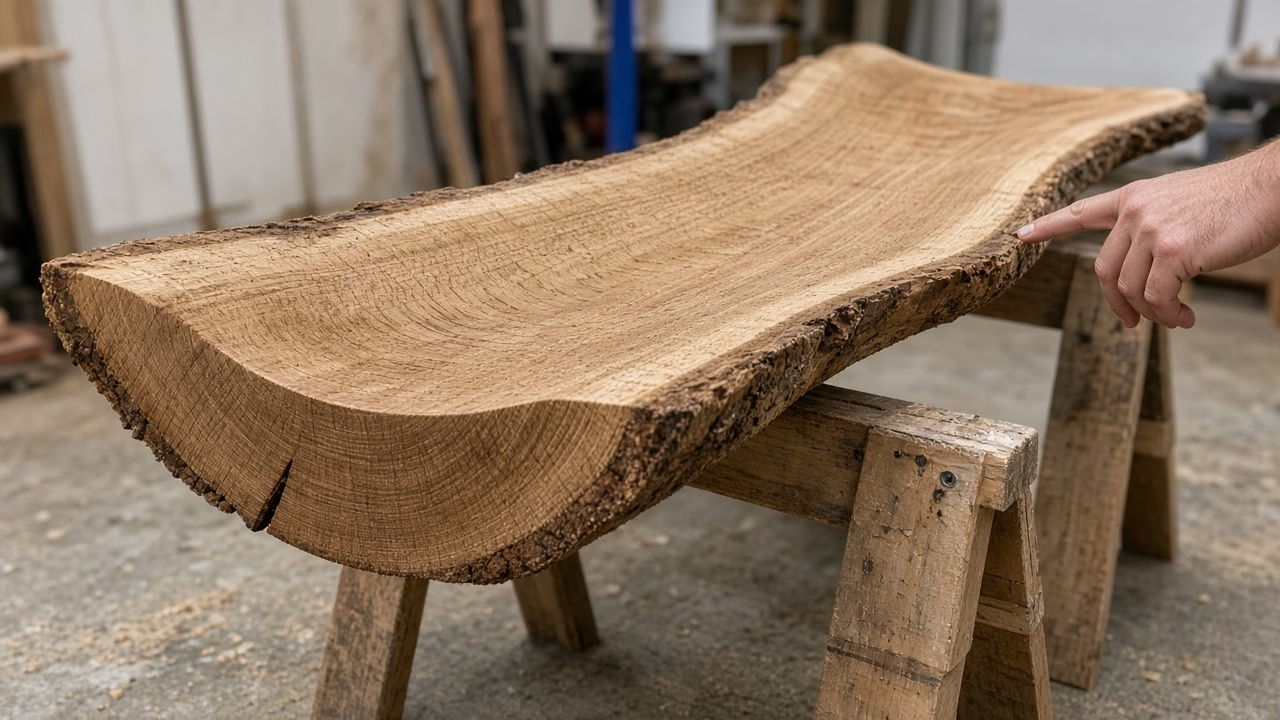
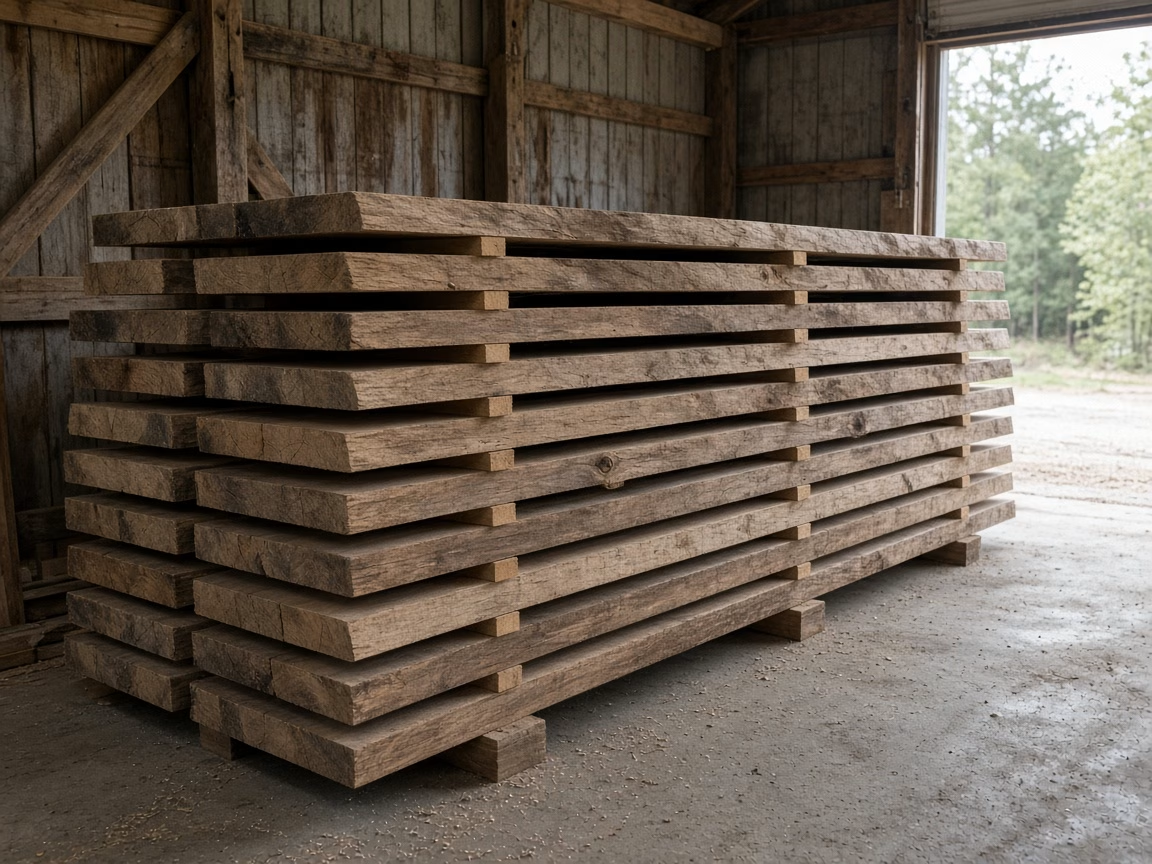
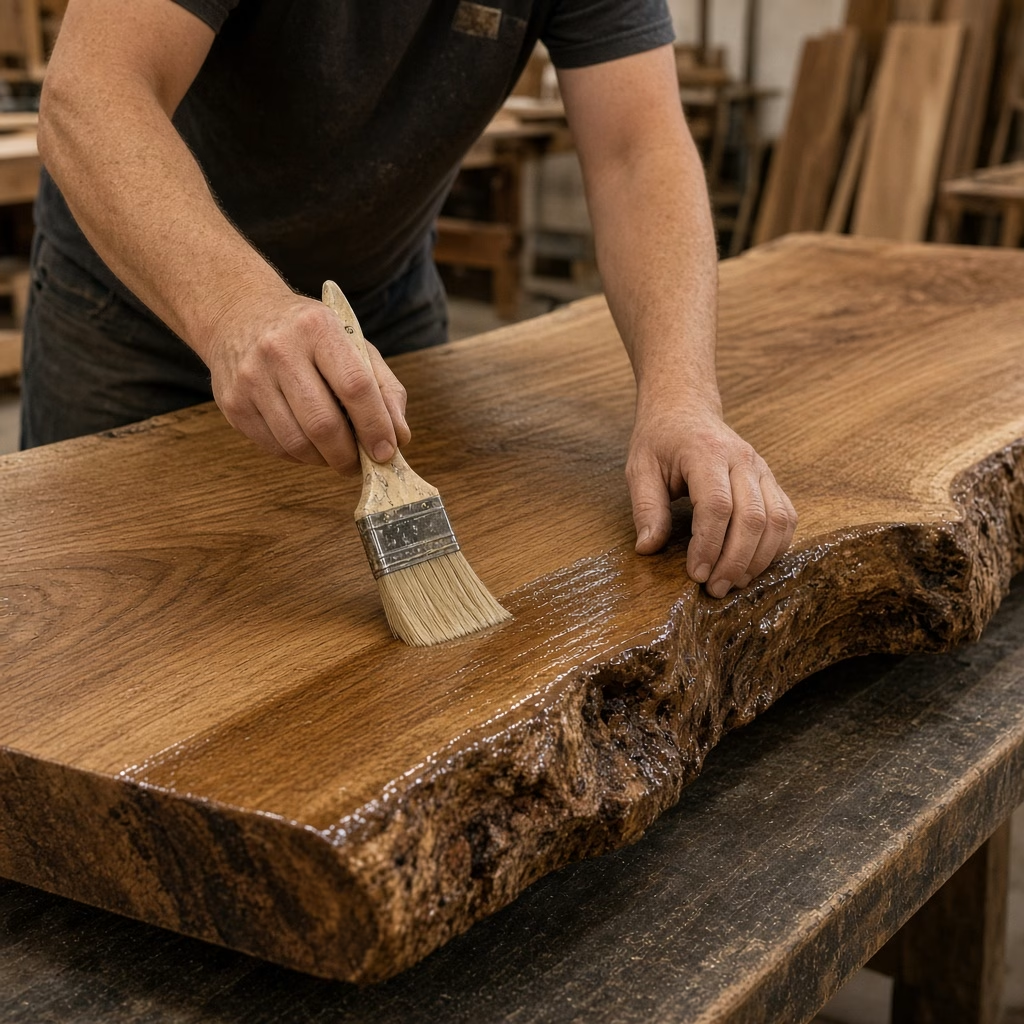
- We sticker the slab and dry it in the air or in the kiln until the moisture reads even through the thickness.
- Then it rests so both faces meet the same air, and we flatten it after that rest.
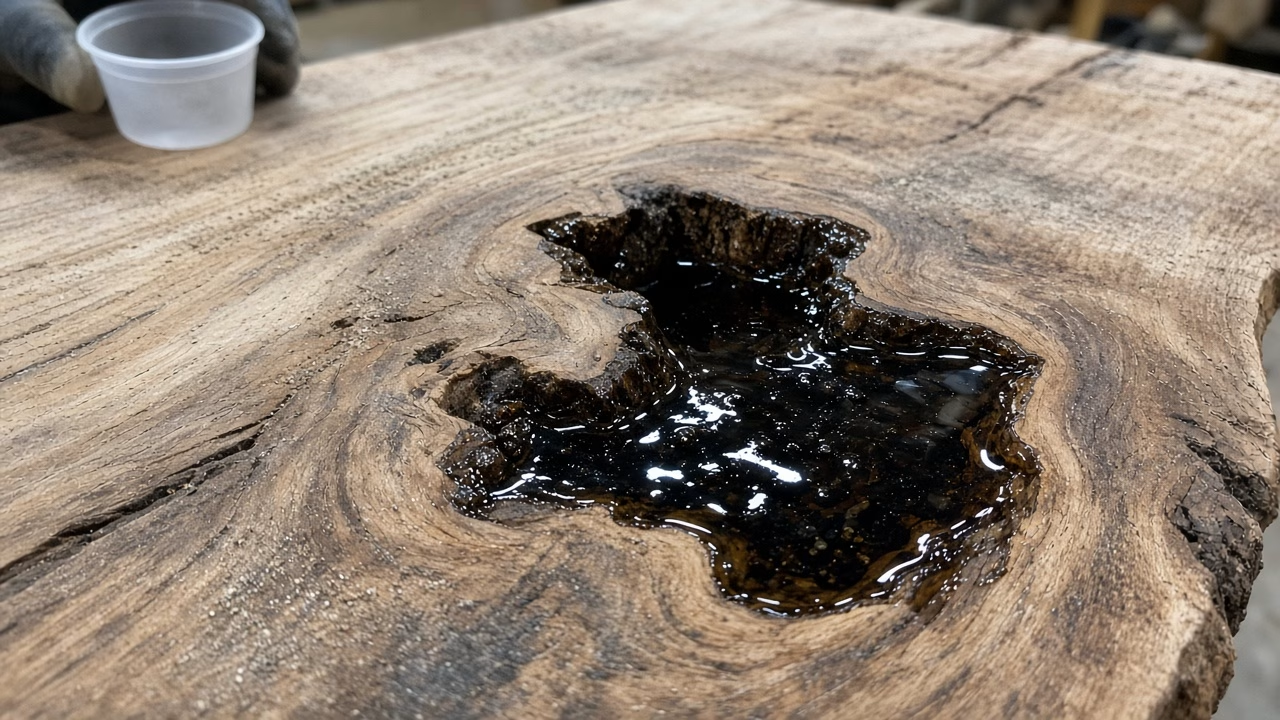
- Sand comes next, and we fill a large void with epoxy only if you want a closed top.
- After the finish goes on, we let it cure before the piece leaves the shop.
But a customer log has to qualify, and the kiln run starts at 500 board feet. Smaller tops come from slabs we have already dried. For more than a decade we have milled our own stock this way.
Shaped by Nature. Finished by Hand.
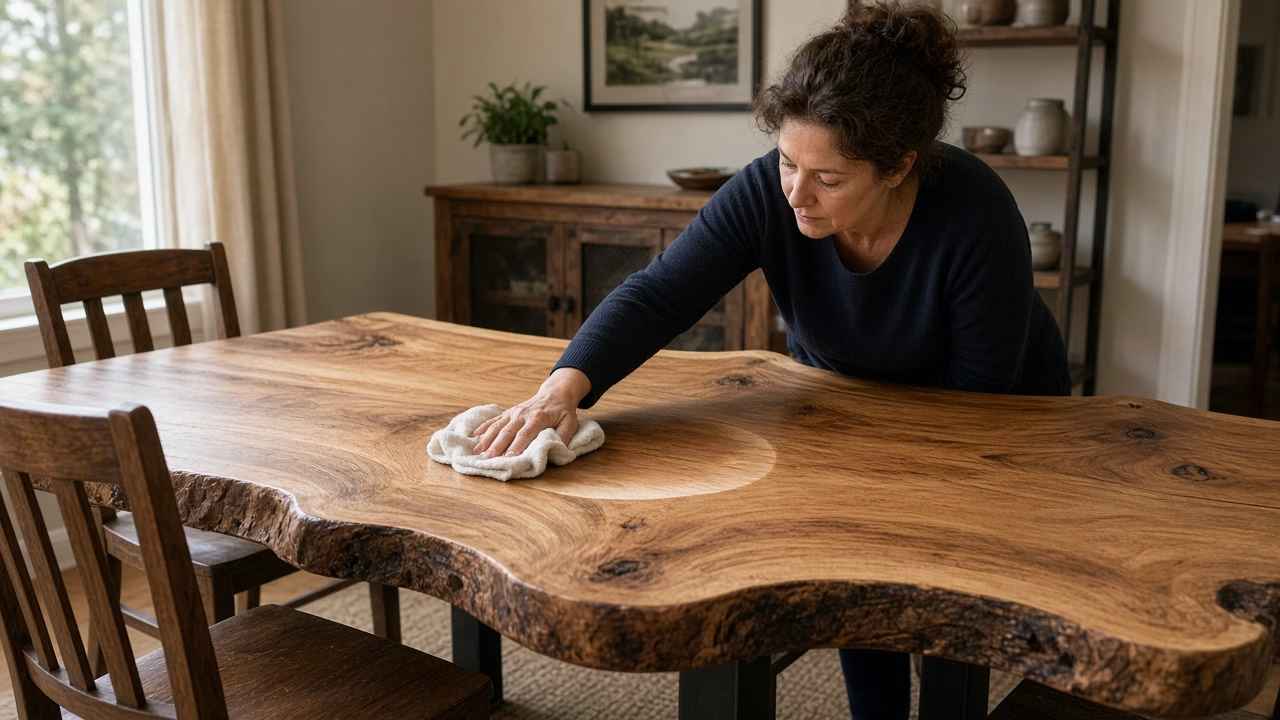
Finish choice changes the care you do at home. A film finish, such as varnish, sheds a short spill. When an oil finish looks dull, it needs another wipe, and a wet glass marks it faster.
We pour epoxy when a void would catch crumbs. The wood around that fill can still swell once the room turns damp. For a dining top, most folks pick a film they can wipe and dry right away.
A Resource for Ideas of Every Size
Shop Time for Live Edge Slabs in Pineville
A wipe and a look under the top are home jobs. A cup that stays, or a crack that keeps opening, means a shop visit. We’ll tell you the shop time after we see how deep the move is.
Then the new film has to cure before you set dishes on it. After a heavy sand, that cure is the long part of the job. Because we flatten only the high spots, some visits stay on a light sand and a coat.
More to Discover Around Every Corner
When humid weeks stack up, look along any wall a top can rub. Then check the underside, and any cloth left bunched on the slab. A wet cloth keeps one spot damper, which starts many cups on Live Edge Slabs in Pineville.
We keep dried stock and the finishes we use on our live edge slabs work. After you read that page, you can see what we mill and what is already dry in the racks.
See What We’ve Been Creating
People in older houses have told us an upstairs room stays closer to the outdoor air. But in newer houses the cooling can pull a room drier while it runs. We’ve heard both setups from people around Pineville, North Carolina.
When the system cycles hard, the slab sees a wetter stretch and then a drier one. So let the piece sit in the room where it will live before we lock the base down. We slot the bolt holes so the top can move across the grain.
Planning an Outdoor Project?
Porch Care for Live Edge Slabs in Pineville
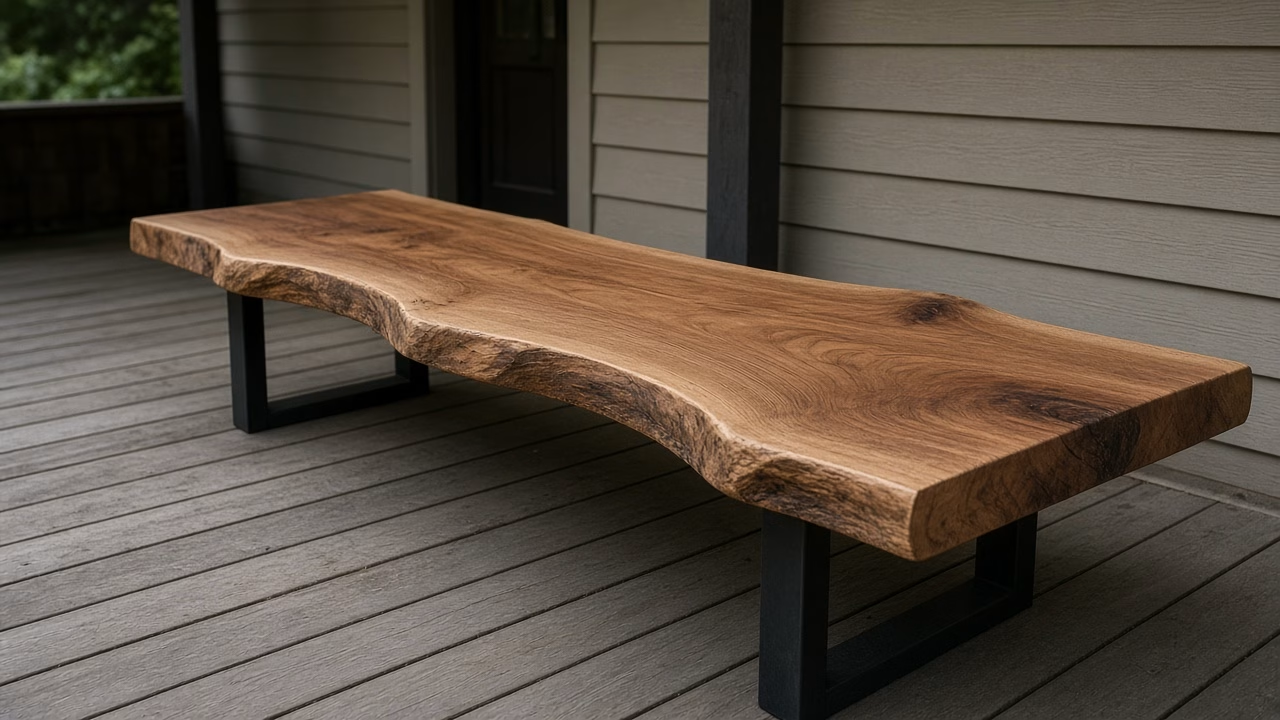
A screened porch and a covered entry stay damper than a room on air conditioning. Direct sun on one half of a top dries that half faster. So we ask where the piece will sit before we pick the finish.
We have made benches and mantels for those spots. The same drying rules apply before they go out. For exterior use we pick a finish that can take damp air and sun. Then we still want the slab acclimated to that porch when we can.
People have called after a top rubbed a wall in a hot spell, then eased once the air dried. Some calls were about a cup that stayed, and a finish that opened along the live edge.
When the cup eased, we told them to watch the next dry spell before they sanded. When it stayed, we often found the base bolted tight on Live Edge Slabs in Pineville.


Come See What’s Taking Root
If you are choosing a new piece, ask how that species moves in damp air. Then look through dried Live Edge Slabs in Pineville and the finishes on hand.
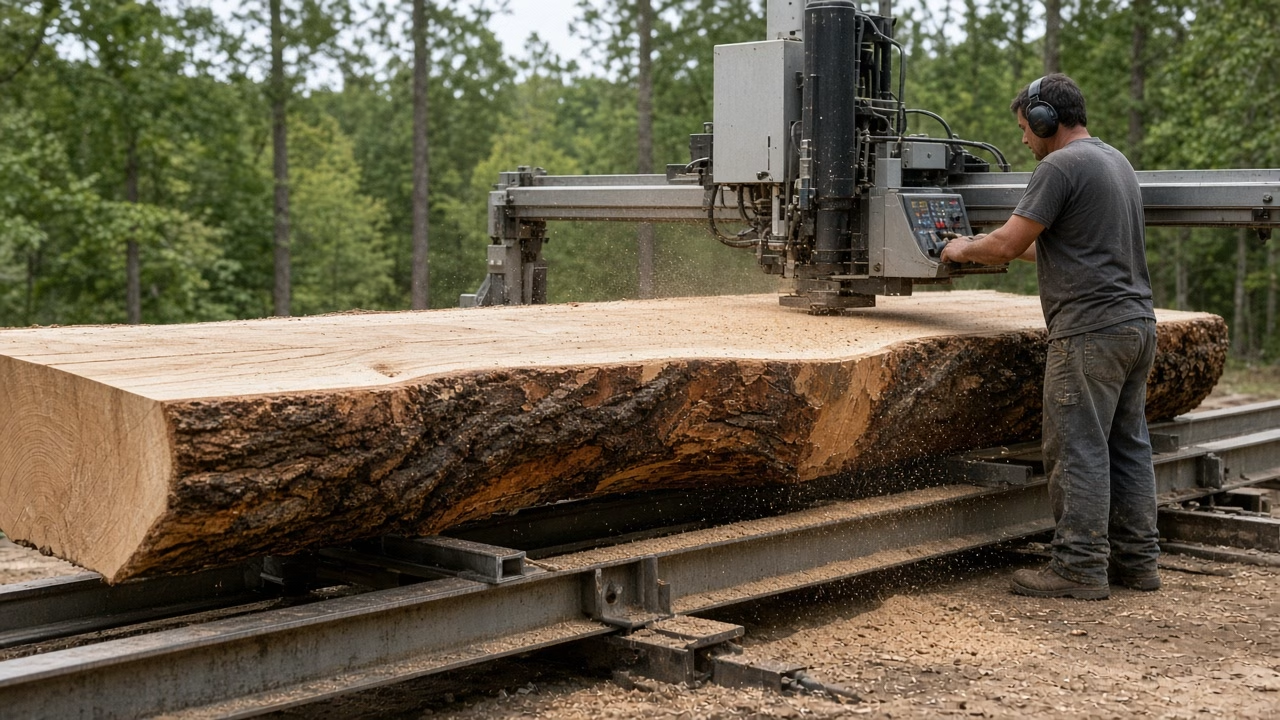
Cost follows width and species. It also follows whether we mill your log or you pick from inventory. Epoxy adds shop time on a void-heavy top. Our Lucas Mill cuts slabs up to six feet wide. A wider top moves more across the grain, so the base has to let it. We also mill matching lumber in the same shop when a job needs boards beside the slab.